
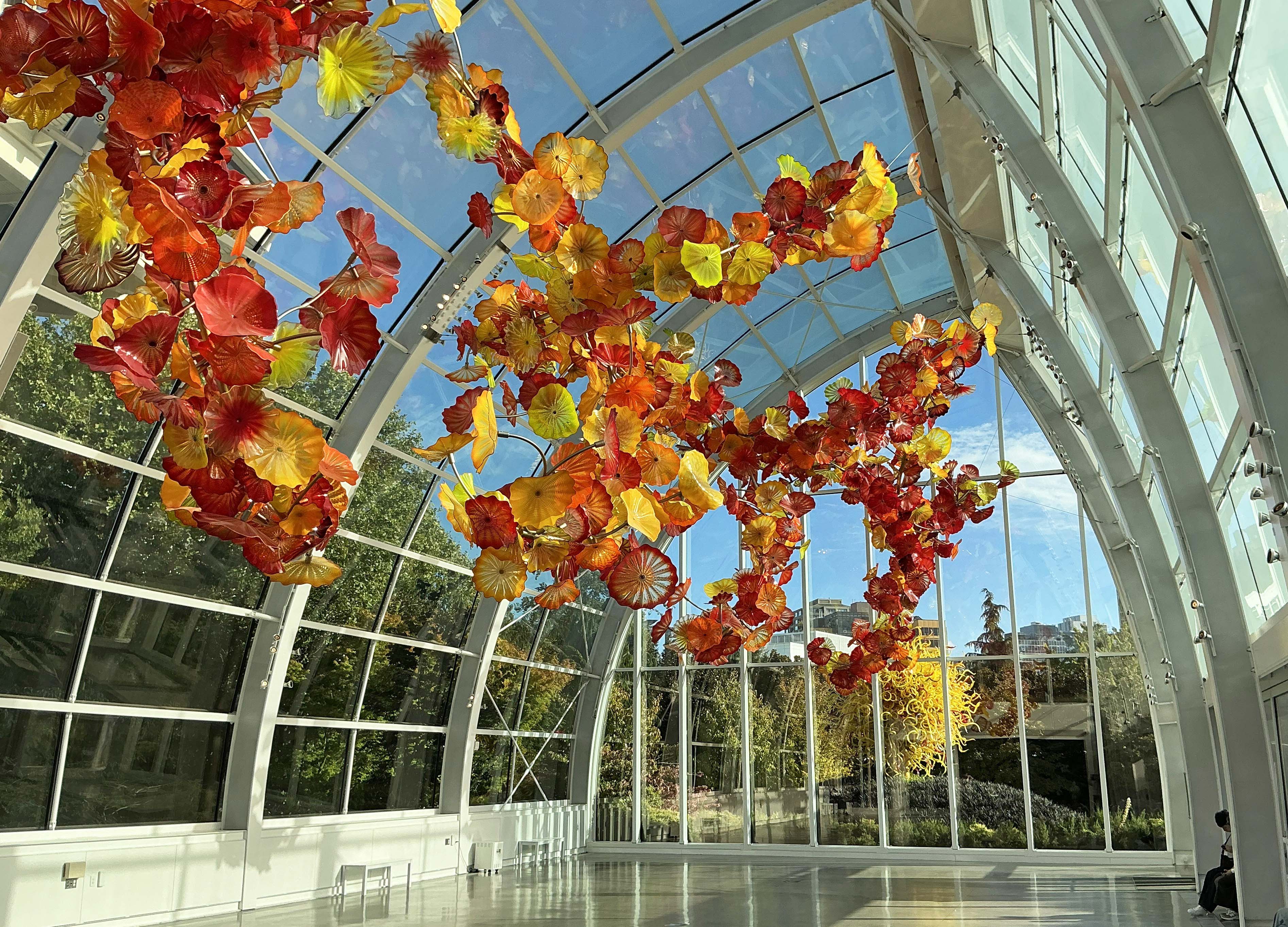
Stepping inside some of today’s most ambitious glass structures, our founders recently traveled to Seattle to admire how modern-day conservatories are interpreting light, structure, and human experience.
The question guiding their journey: How do we innovate without losing the principles that made conservatories endure for centuries?
We often think of historic conservatories as nostalgic or ornamental, but innovation has always been part of conservatory design. They were among the most technologically ambitious structures of their time. Advances in ironwork, glass production, and engineering allowed architects and craftspeople to create unprecedented spaces; environments where nature, architecture, and light could exist in harmony.
What matters most, however, is how that innovation is applied: with restraint, intention, and respect for human and plant experience.
The conservatories of Seattle offered a compelling lens.
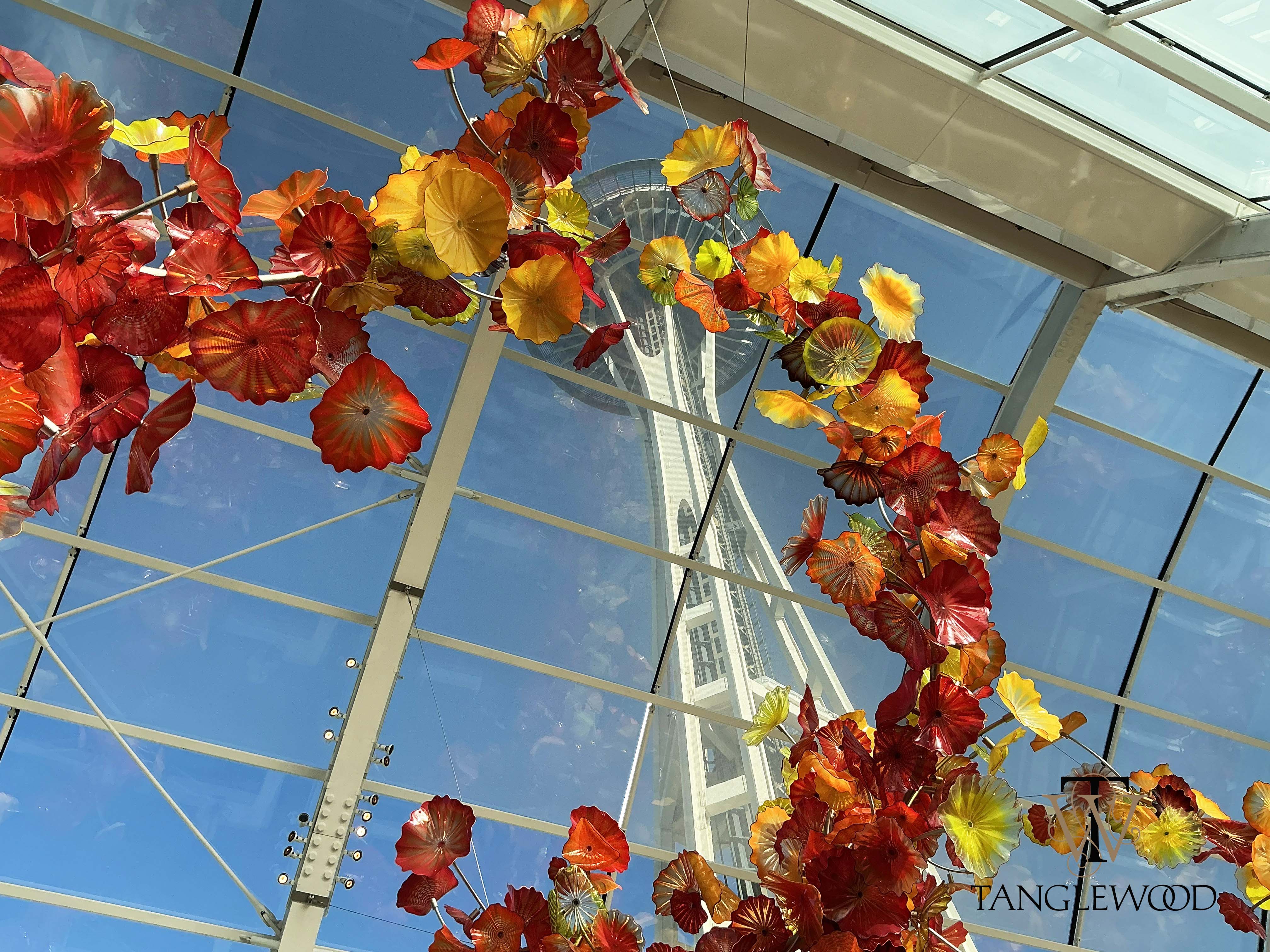
Exploring the Public Conservatories of Seattle, WA
Inside the Chihuly Garden and Glass Conservatory, the first thing you notice is not the structure – and that is precisely the point. Here, the structure does not compete with the art, it supports it. Glass and steel become a quiet framework that allows light, color, and nature to take center stage. Every detail is deliberate. Sightlines are considered. Transparency is purposeful.
That quiet confidence is familiar.
Historic conservatories were designed with the same discipline. Their success was never about excess, but about balance and understanding when structures should assert itself and when it should take a step back. Seeing that principle expressed so clearly in a contemporary setting was a powerful reminder that the best conservatory design has always been rooted in restraint.
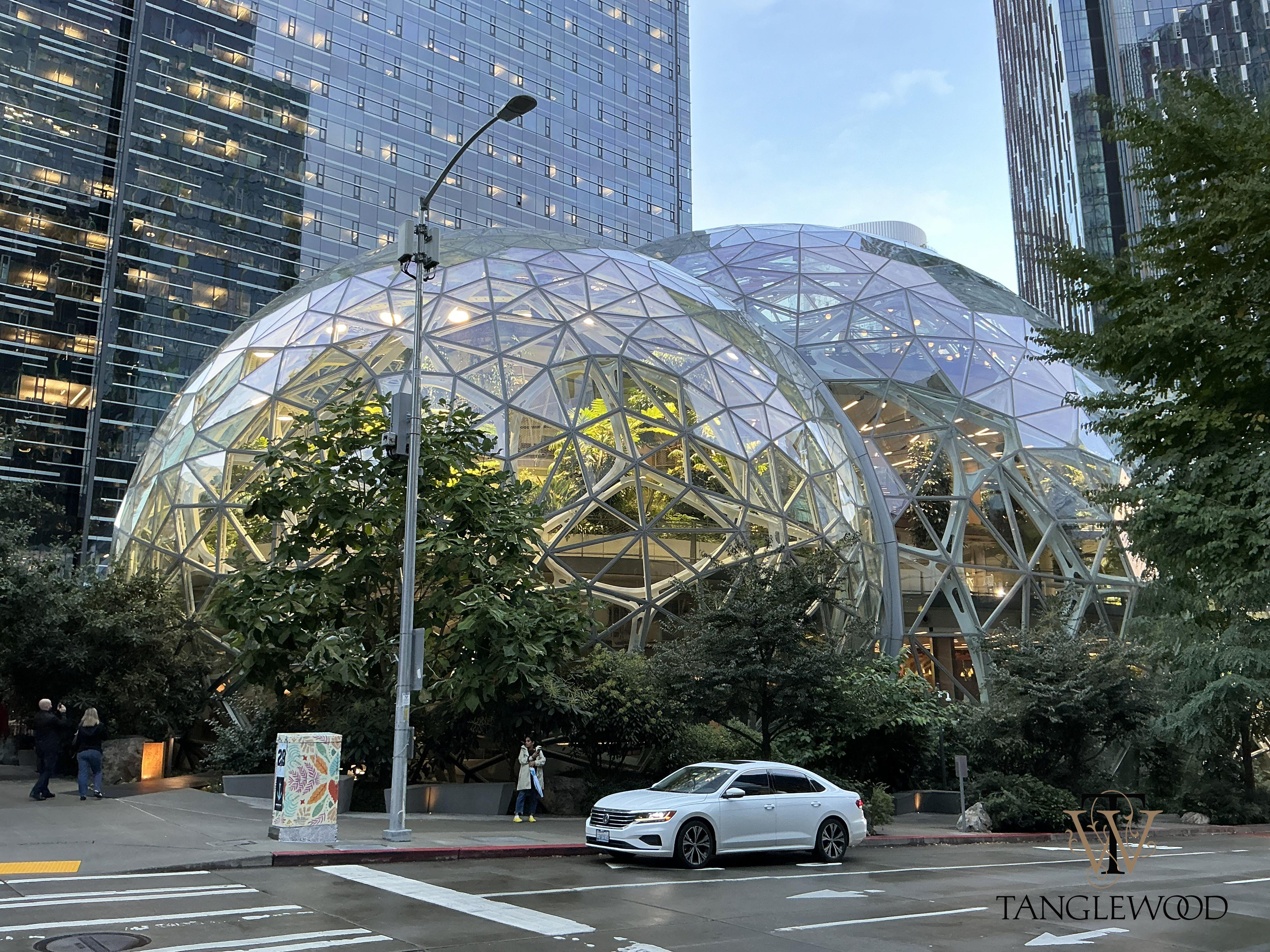
Later, moving through the Amazon Spheres, the energy shifted; it was clear this conservatory takes on a different, yet equally compelling, role. The conservatory is not a destination meant for occasional visits. The spheres were designed to be lived in. People move through them naturally, working, gathering, pausing among plants and filtered light to recharge. Nature is not ornamental here; it is essential to how the space functions.
What stood out most was how seamlessly the conservatory had been reimagined for modern life.
For centuries, conservatories have offered refuge from harsh climates, urban density, and the noise of daily life. The Spheres reaffirm that this role is not diminished. If anything, it has become more necessary in a world increasingly shaped by screens and speed, conservatories offer something grounding: daylight, living plants, and a physical connection to the natural world.
The form may evolve, but the purpose remains, illustrating that conservatories are not relics of the past, but profoundly relevant to the present.
Carrying The Legacy Forward
It is easy to romanticize historic conservatories without remembering how radical they once were. Iron frameworks, expansive glass roofs, and carefully engineered environments were technological achievements of their time, expressions of optimism, curiosity, and ambition.
As Alan and Nancy’s trip came to a close, one impression stayed with them: innovation is not a departure from tradition. It is part of it. What matters is intention. Innovation that ignores history risks becoming hollow. Heritage that resists evolution risks becoming static. The most enduring work lives between those extremes.
Every journey like this quietly informs the work we do at Tanglewood. It influences how we approach every design, sharpening our attention to detail and reinforces why craftsmanship, material selection, and quality matter. Most importantly, it reminds us that a conservatory is never just a room. It is an experience. One that should feel timeless and deeply personal.
This is the legacy we are committed to carrying forward.